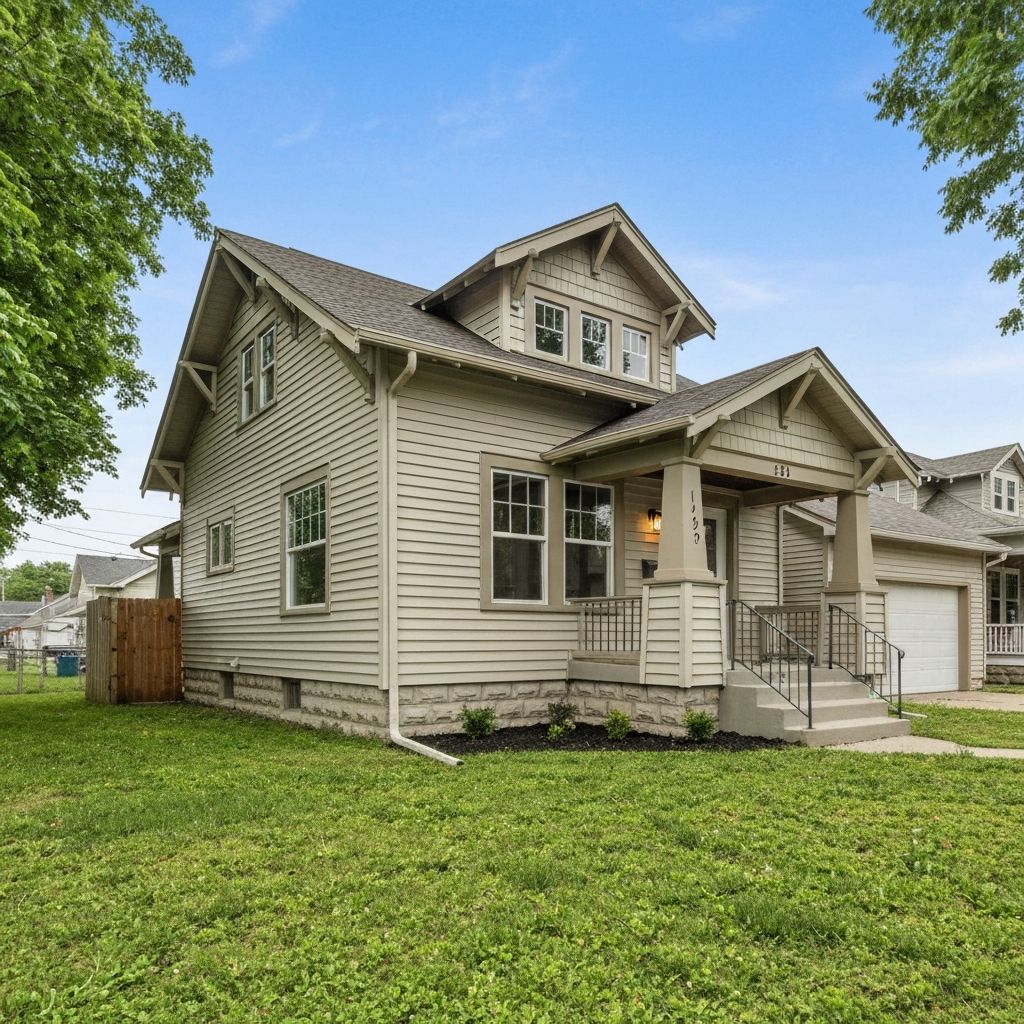
If you've spent any time in real estate investing circles, you've heard the acronym. BRRRR — Buy, Rehab, Rent, Refinance, Repeat — has become one of the most talked-about wealth-building strategies in real estate over the past decade. And in 2026, with Detroit and Michigan continuing to offer some of the strongest cash-flow fundamentals in the country, it's more relevant than ever.
But here's the problem: most BRRRR guides are written for a generic market. They don't account for Detroit's property tax structure, the nuances of Michigan lending, or what a realistic rehab budget looks like in a Midtown duplex versus a Brightmoor single-family. This guide does.
Whether you're running your first deal or trying to scale a portfolio, this is the complete breakdown of how BRRRR works in 2026 — the math, the risks, the process, and the tools that make it faster.
What Is the BRRRR Method?
BRRRR stands for:
- Buy — Acquire a distressed or undervalued property below market value
- Rehab — Renovate it to increase value and attract quality tenants
- Rent — Place a tenant and begin generating cash flow
- Refinance — Pull equity out via a cash-out refinance based on the new appraised value
- Repeat — Use that extracted capital to fund the next deal
The core idea is capital recycling. Instead of leaving your down payment locked in a property forever, you renovate your way to equity, refinance to pull that equity back out, and redeploy it into the next investment. Done right, you can acquire multiple properties using roughly the same initial capital.
This is what separates BRRRR from a traditional buy-and-hold strategy. Both end in a rental property generating monthly cash flow. But BRRRR lets you do it again, and again, without needing a fresh pool of capital for each deal.
Why BRRRR Still Works in 2026 — Especially in Detroit
Some investors question whether BRRRR still pencils out in today's rate environment. The short answer: in the right markets, absolutely. In Detroit specifically, the case is compelling.
Detroit consistently ranks as one of the top cash-flow markets in the country. Median property prices remain far below national averages, rents have been trending upward across strong neighborhoods, and the city's ongoing revitalization — from Midtown and Corktown to East English Village — continues to generate real ARV appreciation for well-executed rehabs.
A few Detroit-specific factors that work in your favor for BRRRR:
Low acquisition costs. You can still find legitimate BRRRR candidates in the $40,000–$90,000 range in stabilizing Detroit neighborhoods — price points that are essentially impossible in most major metros.
Strong rent-to-price ratios.The 1% rule (monthly rent ≥ 1% of purchase price) — a rough benchmark many investors use — is achievable in Detroit in a way it simply isn't in appreciating markets like Austin or Phoenix.
Detroit's property tax structure.Michigan's 70-mill non-principal residence tax rate is significant and must be factored into your cash flow projections. Many investors underestimate this. If you're buying as an investor (not owner-occupant), you will not qualify for the 18-mill PRE (Principal Residence Exemption), so your effective tax rate is meaningfully higher than it would be for an owner-occupied property. This directly affects DSCR calculations at refinance.
Hard money availability.Michigan has an active hard money lending ecosystem, and Detroit-area lenders are experienced with distressed property acquisitions — which is exactly what you need for BRRRR's acquisition and rehab phases.
The BRRRR Process: Step by Step
Step 1: Buy
The most important rule in BRRRR investing: the deal is made at acquisition. Everything downstream — your rehab budget, your refinance outcome, your cash flow — flows from what you paid on day one.
What to Look For
BRRRR candidates are typically distressed properties with deferred maintenance, cosmetic damage, or outdated systems — but sound structural bones. You're not looking for gut rehabs unless your budget and timeline support it. The sweet spot is a property that needs $20,000–$50,000 in work to bring it to rental-ready condition and justify a strong appraisal.
Target properties trading at a significant discount to their After Repair Value (ARV). Most experienced BRRRR investors use the 70% rule as a starting filter:
Maximum Purchase Price = (ARV × 70%) − Rehab Costs
So if a property has an estimated ARV of $120,000 and you're projecting $30,000 in rehab:
($120,000 × 0.70) − $30,000 = $54,000 max purchase price
This isn't a hard ceiling — it's a filter. It builds in enough equity cushion to survive cost overruns, appraisal variance, and still exit the refinance with capital back in your pocket.
Where to Find Deals
- MLS distressed listings — foreclosures, estate sales, price reductions on neglected properties
- Wholesaler networks — off-market deals sourced by wholesalers who assign contracts for a fee
- Direct mail and driving for dollars — targeting vacant or neglected properties directly
- Tax-delinquent lists — available through Detroit/Wayne County; owners in distress may be motivated to sell
- REO (bank-owned) properties — post-foreclosure bank inventory often priced for quick sale
Financing the Purchase
BRRRR acquisitions typically don't qualify for conventional financing because lenders won't lend on distressed properties. Your primary options:
- Hard money loans — short-term, asset-based loans (typically 60–75% LTV on ARV, 9–13% interest, 6–12 month terms). The standard bridge vehicle for BRRRR acquisitions.
- Private money — capital from individual investors. Often more flexible terms than institutional hard money.
- Cash — ideal if you have it. Eliminates interest carry during rehab.
- HELOC or cash-out refi on existing property — using equity from your current portfolio to fund the next deal.
Step 2: Rehab
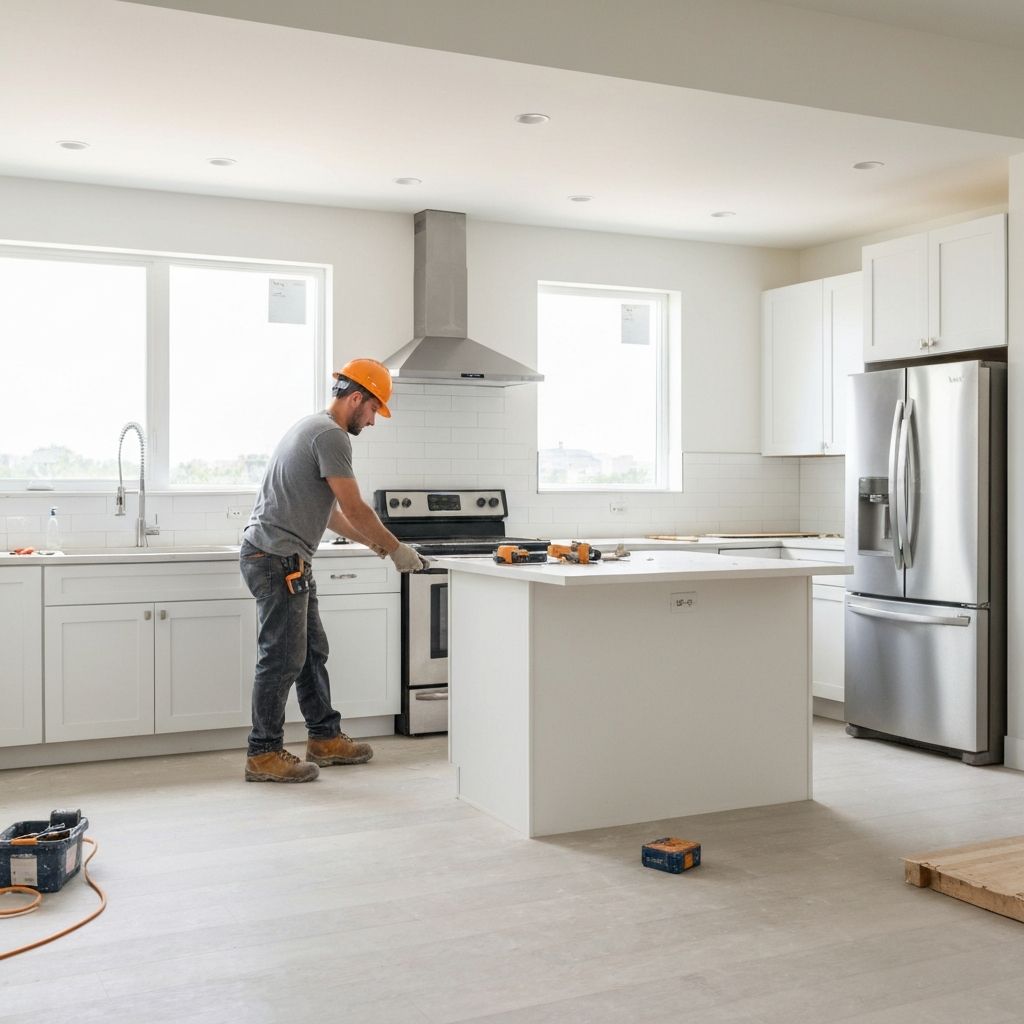
Rehab is where BRRRR investors win or lose. Over-renovating destroys your return. Under-renovating produces a poor appraisal and a problem tenant.
The Goal
You're renovating to two objectives, simultaneously:
- Maximize appraised value — the appraisal drives your refinance, which determines how much capital you recover
- Attract and retain quality tenants — durable, low-maintenance finishes that photograph well and hold up
This means you're not renovating to the level of a retail flip. You don't need quartz countertops and designer tile. You need clean, functional, updated, and safe.
Budget by Systems
Use this rough framework to estimate Detroit-market rehab costs:
| Scope | Typical Range |
|---|---|
| Cosmetic only (paint, flooring, fixtures) | $8,000 – $18,000 |
| Cosmetic + kitchen/bath updates | $18,000 – $35,000 |
| Full rehab (systems + cosmetic) | $35,000 – $65,000+ |
| Gut rehab | $65,000+ |
Always add a 20% contingency bufferon top of your line-item estimate. Surprises are not surprises in distressed property rehabs — they're standard.
High-ROI Rehab Priorities
Focus your budget on items that move the needle on both appraisal and tenant appeal:
- Roof (appraisers and lenders look for functional roof first)
- HVAC — furnace, water heater, central air if absent
- Electrical panel updates (knob-and-tube is a lender/insurance flag)
- Flooring — LVP is durable, attractive, and tenant-resistant
- Kitchen — cabinet paint or reface, updated hardware, new appliances
- Bathrooms — vanity, toilet, tile grout
- Exterior — curb appeal affects both appraisal and tenant quality
Managing the Rehab
Project management is the job during rehab. Key practices:
- Get three bids on all major scopes
- Use draw schedules tied to milestone completions if working with a GC
- Do weekly walkthroughs — don't wait until completion to catch problems
- Track every dollar in a running spreadsheet; cost overruns will happen, and you need to know when you're approaching your contingency ceiling
Step 3: Rent

With rehab complete, you need a qualified tenant in place before most lenders will approve a conventional cash-out refinance. Stabilized occupancy is typically a lender requirement (6–12 months for many DSCR products).
Setting Rent
Price to the market, not to your proforma. Use rent comps — actual comparable rentals in the same neighborhood, similar bedroom count, similar condition. Overpricing leads to vacancy; underpricing leaves money on the table and hurts your DSCR at refinance.
In Detroit, rent levels vary significantly by neighborhood and property type. A 3/1 in a B-class Detroit neighborhood might rent for $1,000–$1,300/month. The same property in a stronger East English Village or Grandmont Rosedale might command $1,300–$1,700. Know your sub-market.
Tenant Screening
This step gets rushed more than any other. Don't rush it.
Minimum screening criteria:
- Income verification: 2.5–3x monthly rent in verifiable gross income
- Credit check: Look for patterns, not just a score. Recent evictions or unpaid judgments are disqualifiers.
- Background check: Criminal history review
- Rental history: Reference check with previous landlord(s)
A bad tenant in a BRRRR property costs you cash flow, causes damage, and can derail your refinance timeline. One eviction in Michigan can take 2–4 months and $2,000–$3,000+ in legal costs. Screen hard.
Landlord Compliance
Michigan landlord law requires specific lease provisions and disclosures. Detroit adds local requirements including:
- Certificate of Compliance (rental registration) — required for Detroit rentals
- Lead disclosure requirements — mandatory for pre-1978 housing
- Security deposit rules — Michigan caps at 1.5x monthly rent; written accounting required
Work with a Michigan real estate attorney to build a compliant lease template before you place your first tenant.
Step 4: Refinance

This is the step that defines whether your BRRRR worked. The refinance converts your equity into liquid capital you can redeploy — and it's where the strategy either delivers or disappoints.
The Two-Phase Refinance Timeline
Most BRRRR investors use a two-loan structure:
- Short-term financing (hard money or private): Funds the acquisition and carries you through rehab
- Long-term conventional financing: Replaces the short-term loan post-stabilization, with a cash-out component based on the new appraised value
Understanding Your Refinance Options
Conventional Cash-Out Refinance
- Typically allows up to 75–80% LTV on investment properties
- Requires 6–12 months seasoning (time since acquisition) at many lenders
- Best rates available; requires income documentation, credit review
- Most common for investors with 1–4 properties
DSCR Loans (Debt Service Coverage Ratio)
- Growing in popularity for real estate investors
- Qualifying is based on the property's rent income vs. the mortgage payment — not your personal income
- Typically requires DSCR of 1.0–1.25x (rent covers 100–125% of PITIA)
- Higher rates than conventional, but simpler qualification
- Detroit's 70-mill tax rate matters here: higher taxes reduce DSCR, which can affect loan approval
Portfolio Loans
- Offered by local community banks and credit unions
- Keep loans in-house (not sold to secondary market)
- More flexible on property condition, seasoning, and qualification
- Often the best option for investors building larger Detroit portfolios
Running the Refinance Math
Here's a worked example using Detroit market numbers:
| Line Item | Amount |
|---|---|
| Purchase price | $55,000 |
| Rehab cost | $28,000 |
| Closing/carry costs | $5,000 |
| Total invested | $88,000 |
| After Repair Value (ARV) | $130,000 |
| Refinance at 75% LTV | $97,500 |
| Capital returned to investor | $9,500 |
In this scenario, you've recovered $9,500 of your original $88,000 out-of-pocket — leaving $78,500 still in the deal. Not a home run, but a refinanced, cash-flowing asset with reduced capital exposure. Push the ARV to $140,000 (achievable in stronger Detroit sub-markets) and the math improves substantially.
The goal is to maximize capital recoveredwhile maintaining positive cash flow after the new mortgage payment. Every deal won't be a perfect infinite-return BRRRR — but most well-executed ones will meaningfully reduce your capital at risk.
The BRRRR Danger Zone: Appraisal Gap
The single biggest risk at the refinance stage is an appraisal that comes in below your projected ARV. If you planned for $130,000 but appraised at $110,000, your 75% LTV loan is now $82,500 — and suddenly you're recovering far less capital than expected.
Protect yourself:
- Run conservative ARV estimates during underwriting (use p50 comps, not the best-case comparable)
- Understand Detroit appraisal dynamics — appraisers must use neighborhood comps, and sparse comp data in transitional areas can drag values
- Document every rehab improvement with photos, receipts, and a scope summary to present to the appraiser
- If possible, meet the appraiser at the property to walk through the work completed
Step 5: Repeat
With capital recovered from the refinance, you now have the fuel for the next deal. This is where BRRRR becomes a compounding machine.
Each successive cycle:
- Requires less net new capital (if your refinances are efficient)
- Adds a cash-flowing asset to your portfolio
- Builds equity in multiple properties simultaneously
- Increases your track record with lenders, improving terms over time
The most disciplined BRRRR investors don't treat recovered capital as profit — they treat it as working capital for deal #2, #3, and #4.
Key Metrics Every BRRRR Investor Needs to Track
Before you close on any BRRRR deal, these numbers need to be locked in:
After Repair Value (ARV)
Your projected market value post-renovation, based on comparable sold properties within 0.5 miles, similar condition and bed/bath count, within the last 90–180 days.
Total Cost Basis
Purchase + rehab + closing costs + carry costs (loan interest during rehab) + vacancy allowance. This is your true all-in number.
Projected Refinance Proceeds
ARV × LTV (typically 0.75) = loan amount. Subtract your existing loan payoff to get net cash out.
Cash Flow
Monthly rent − PITI (principal, interest, taxes, insurance) − property management (8–10%) − maintenance reserve (5–8%) − vacancy allowance (5–8%)
In Detroit, don't forget: property taxes at the investor rate (70 mills) often run $200–$500/month on properties in the $100,000–$140,000 ARV range. This alone can flip a deal from cash-flow positive to neutral.
Cash-on-Cash Return
Annual cash flow ÷ remaining equity invested. The closer you get your remaining invested capital to zero, the higher this number climbs — the theoretical BRRRR ideal.
DSCR
Gross monthly rent ÷ monthly PITIA. Lenders want to see 1.0–1.25x. Running this before you lock a rental price is critical.
Common BRRRR Mistakes (and How to Avoid Them)
Underestimating rehab costs
The number one deal-killer. Budget conservatively, add 20% contingency, and get real bids — not ballpark estimates from your contractor's cousin.
Over-renovating for the rental market
You're not staging a retail sale. Granite, custom tile, and high-end appliances don't move the needle on rental income proportionally. Stick to durable, attractive, market-appropriate finishes.
Projecting ARV too aggressively
Use the median comp, not the best one. The deal needs to work on realistic numbers, not the optimistic scenario.
Ignoring carry costs
Every month your rehab runs long is another month of hard money interest. A 3-month project that runs 5 months adds 2 months of carrying costs — typically $1,500–$3,000+ on a $100,000 loan at 12%.
Skipping tenant screening
Already covered above. It deserves repeating. One bad tenant can erase 12 months of cash flow.
Not accounting for Detroit-specific taxes
The 70-mill non-homestead rate catches investors off guard. Model it correctly from the start.
How Homestream Accelerates the BRRRR Analysis Process
Running BRRRR analysis manually — pulling comps, estimating ARV, modeling cash flow scenarios, stress-testing your refinance math — takes hours per deal. Most investors either skip steps or rely on gut feel.
Homestream's BRRRR analysis tool does this work automatically. Enter the address, and the platform:
- Pulls real-time rent comps from RentCast to validate your projected rent
- Calculates ARV using a waterfall of data sources (MLS comps, AVM estimates, comparable sales) calibrated to Detroit market dynamics
- Models your full cash flow projection with Michigan-accurate property tax calculations built in — including the 70-mill non-homestead rate
- Runs a cash-on-cash return and DSCR calculation so you know before you offer whether a refinance will actually work
- Generates a deal report you can share with your lender, partner, or brokerage client in one click
The goal is to give every Detroit investor the same underwriting horsepower that institutional buyers bring to every deal — without the 4-hour spreadsheet.
Ready to analyze your next BRRRR deal?
Analyze Your Deal on HomestreamFrequently Asked Questions
How much money do I need to start a BRRRR deal in Detroit?
It depends on your financing structure. A typical Detroit BRRRR using hard money might require $15,000–$30,000 in out-of-pocket costs (down payment, points, closing costs, and initial rehab) before draws. Having $40,000–$60,000 in accessible capital gives you a comfortable cushion for a first deal.
How long does a typical BRRRR cycle take?
From acquisition to stabilized tenancy: typically 4–8 months for a standard renovation. Add another 6 months for lender seasoning requirements before refinancing. Budget 10–14 months for a full cycle on your first deal.
Can I do BRRRR with an FHA loan?
No. FHA loans require owner-occupancy. However, FHA house hacking (purchasing a 2-4 unit property, living in one unit) is a related strategy that allows you to access low down payment financing while generating rental income on the other units — a legitimate on-ramp to real estate investing.
What credit score do I need?
For conventional cash-out refinancing, most lenders want 680+. DSCR loans vary by lender — some go as low as 640. For the acquisition phase using hard money, credit requirements are more flexible; lenders focus primarily on deal quality and ARV.
Is BRRRR taxable?
The cash you pull out from a refinance is a loan, not income — so it's not directly taxable at the time of refinance. However, your rental income is taxable, and when you eventually sell, capital gains taxes apply. Depreciation deductions during the hold period provide meaningful tax advantages. Consult a CPA who works with real estate investors.
What's the difference between BRRRR and fix-and-flip?
Fix-and-flip is a short-term exit strategy — buy, renovate, sell. BRRRR is a long-term hold strategy — buy, renovate, rent, refinance, keep. Flipping generates a lump-sum profit event; BRRRR builds a cash-flowing asset while recycling capital.
Final Thoughts
BRRRR investing in 2026 still works. In Detroit and across Michigan, the fundamentals — acquisition prices, rent ratios, and revitalization momentum — make it one of the better cash-flow markets available to investors.
But it requires discipline. The deal is made at acquisition. Rehabs must be budgeted honestly. Refinances must be modeled conservatively. And the Detroit-specific dynamics — particularly the 70-mill tax rate — must be factored in from day one.
For investors willing to do the work, BRRRR remains one of the most powerful wealth-building strategies in real estate. The math works. The market supports it. And with the right tools, the analysis doesn't have to take all weekend.
Run your numbers. Know your market. And when you find a deal that pencils — move.