
ARV determines how much you should pay for a property. It sets the ceiling on your rehab budget. It controls how much capital you recover in a refinance. It decides whether a deal is a home run, a breakeven, or a loss before you ever swing a hammer.
Get ARV right, and the rest of the deal has room to breathe. Get it wrong — even by 10% — and a deal that looked profitable on paper becomes a cash trap you can't exit cleanly.
What Is ARV in Real Estate?
ARV stands for After Repair Value — the estimated market value of an investment property after all planned renovations and improvements have been completed.
It's not what the property is worth today. It's not what you paid for it. It's a forward-looking estimate: what will a buyer or appraiser say this property is worth once the work is done?
ARV is used by:
- Fix-and-flip investors to determine maximum offer price and target sale price
- BRRRR investors to model refinance proceeds and cash-on-cash returns
- Lenders to calculate loan-to-value ratios on rehab financing
- Wholesalers to price assignment fees on distressed deals
- Real estate agents to advise investor clients on deal viability
The same fundamental question underlies all of these uses: is the spread between what I'll pay and what this property will be worth after renovations large enough to make the deal work? ARV is the anchor for that answer.
The Basic ARV Formula (And Why It's Not Enough)
The most common ARV formula you'll see is:
ARV = Current Property Value + Value Added by Renovations
So if a property is worth $60,000 as-is, and your $35,000 rehab will add $55,000 in value, your ARV is $115,000.
Simple. But this formula has a fundamental flaw: it assumes you know what value your renovations will add. You don't. The market decides that — not your contractor's estimate or your gut feeling.
The more reliable method is comp-based ARV estimation: instead of calculating forward from what you're spending, you look backward from what renovated, comparable properties have already sold for in the same neighborhood. That's the real ARV.
How to Calculate ARV Using Comparable Sales
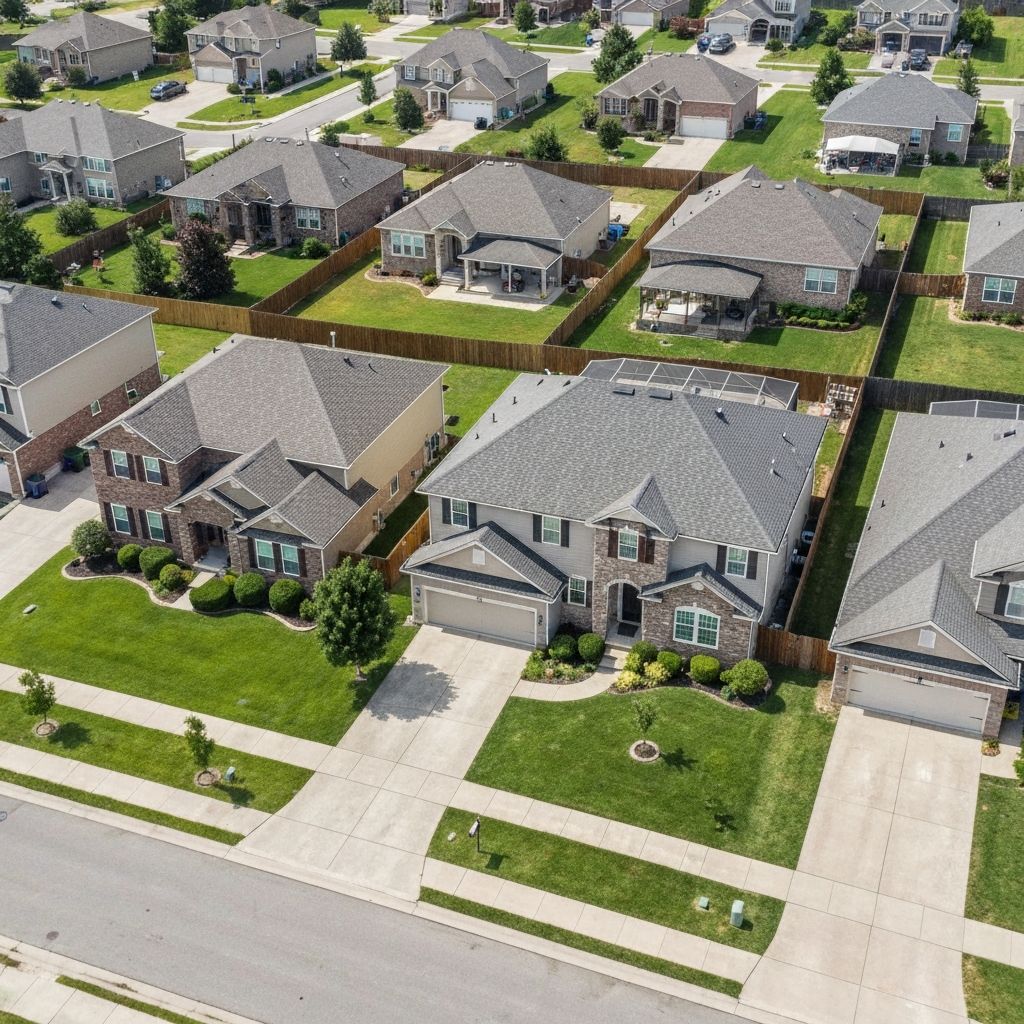
Here's the step-by-step process for a comp-based ARV estimate:
Step 1: Define Your Subject Property
Before you can find comparables, you need a clear profile of your property at its projected post-renovation state:
- Square footage
- Bedroom and bathroom count
- Property type (single-family, duplex, etc.)
- Construction style and era
- Target condition and finish level after rehab
This is what you're trying to find comps for — not the distressed property you're buying, but the renovated asset you're creating.
Step 2: Pull Comparable Sales
Comps are recently sold properties that closely match your post-renovation subject property. The tighter the match, the more reliable your ARV.
Ideal comp criteria:
- Location: Same neighborhood or subdivision — ideally within 0.5 miles. In Detroit, neighborhood-level accuracy matters enormously.
- Recency: Sold within the last 90 days. Six months is the outer limit.
- Size: Within 10–15% of your subject's square footage
- Bed/bath count: Same or very close
- Condition: Renovated or updated — you're modeling post-rehab value
- Property type: Apples to apples
Aim for 3 to 6 strong comps. In active markets, 3 is enough. In Detroit's more transitional neighborhoods where comp density is thinner, you may need to widen your search radius slightly.
Step 3: Adjust for Differences
No two properties are identical. You should account for major variances:
| Feature | Rough Adjustment Range |
|---|---|
| Each bedroom (above or below) | $5,000 – $15,000 |
| Each bathroom (full) | $5,000 – $10,000 |
| Garage (1 vs. 2 car, or none) | $5,000 – $15,000 |
| Square footage (per sq ft) | $30 – $70/sq ft |
| Finished basement | $10,000 – $25,000 |
Step 4: Average the Adjusted Comps
Once you've adjusted each comp, average the adjusted sale prices. That average is your ARV estimate.
| Comp | Sold Price | Adjustment | Adjusted Value |
|---|---|---|---|
| Comp A | $118,000 | −$5,000 (extra bathroom) | $113,000 |
| Comp B | $122,000 | +$8,000 (smaller sq ft) | $130,000 |
| Comp C | $115,000 | None | $115,000 |
| ARV Estimate | $119,333 |
Round conservatively: $119,000 ARV.
Step 5: Apply a Conservative Buffer
Markets move. Appraisers interpret data differently. Comps are imperfect. For investment underwriting, use the p50 (median) comp estimate, not the best-case comparable.
If your comps range from $112,000 to $130,000, don't underwrite to $130,000. Use the median. If the deal doesn't pencil at $119,000, it doesn't pencil.
The 70% Rule: Using ARV to Set Your Maximum Offer
Once you have your ARV, the most common investor framework for determining maximum purchase price is the 70% rule:
Maximum Offer Price = (ARV × 70%) − Estimated Rehab Costs
Using the example above:
($119,000 × 0.70) − $30,000 = $53,300 maximum offer
The 70% rule builds in a profit/equity cushion that covers holding costs, unexpected rehab overruns, transaction costs, and appraisal variance at refinance.
Calculate ARV Instantly
Homestream automates comp analysis for Detroit and Michigan markets — pulling real sales data and producing defensible ARV estimates in seconds.
Try Homestream FreeARV for BRRRR vs. Fix-and-Flip: Key Differences
ARV is used in both strategies, but the math it feeds is different.
Fix-and-Flip:ARV is your projected sale price. The spread between ARV and total cost basis is your gross profit. You're in and out within 6–12 months.
BRRRR:ARV drives your refinance proceeds. At 75% LTV, a $120,000 ARV supports a $90,000 loan. If your total cost basis is $88,000, you've recovered $2,000 in cash and own a cash-flowing asset with $30,000 in equity.
For BRRRR investors specifically, ARV accuracy is more forgiving on the upside but more dangerous on the downside. An ARV that comes in 10% high on a BRRRR can mean $20,000–$30,000 permanently trapped in the deal instead of recycled into the next one.
6 Common ARV Mistakes That Kill Deals

- Using active listings instead of sold comps
List prices are wishes. Sold prices are reality. Always pull closed sales. - Ignoring condition in your comps
A renovated 3/2 and a dated 3/2 are not the same comp. Filter for finished, updated properties. - Stretching your geography
In Detroit, a property in East English Village does not comp to a property in Morningside. Keep your comps tight. - Using stale data
A comp from 14 months ago is not reliable. In neighborhoods seeing active appreciation, 6-month-old data can misrepresent values. - Letting optimism drive your estimate
The deal you want to make is not a valid input. ARV is a market data exercise, not a negotiation with yourself. - Ignoring Detroit-specific appraisal dynamics
In transitional neighborhoods with limited recent sales, comp scarcity can constrain what an appraiser will support.
How Homestream Calculates ARV
Homestream doesn't rely on a single data source or a simple formula. Our ARV engine uses a proprietary waterfall model that layers multiple valuation signals:
The ARV Waterfall
- MLS Comparable Sales (Primary Source)
The model pulls recent closed sales, applies filters for property type, bed/bath count, size band, and sale recency, then adjusts for feature differences. - RentCast AVM
For markets where MLS comp pools are thinner, Homestream integrates RentCast's automated valuation model as a second data layer. - Zestimate and API Estimate Cross-Check
Additional AVM signals are cross-referenced, allowing the model to detect outliers and anchor on the consensus estimate. - 1.3x Acquisition Cost Fallback
In low-data environments, a cost-basis floor ensures reasonable estimates.
Detroit-Calibrated
Generic AVMs are trained on national data. They don't know that a property in Grandmont Rosedale comps differently than one five blocks outside the neighborhood boundary. Homestream's models are calibrated specifically to Detroit and Michigan markets.
A Detroit BRRRR Example
Let's walk through how ARV flows into a complete deal:
Property: 3BD/1BA single-family, Jefferson-Chalmers neighborhood, Detroit
Purchase price: $52,000
Estimated rehab: $32,000
Total cost basis: ~$90,000 (including closing and carry)
ARV Analysis: Homestream pulls 4 comps within 0.4 miles: renovated 3/1 and 3/2 sales ranging from $108,000 to $125,000 over the past 90 days. After adjusting, the median is $113,000 ARV.
70% Rule Check:
($113,000 × 0.70) − $32,000 = $47,100 maximum offer
Refinance Projection:
$113,000 × 0.75 = $84,750 loan proceeds
$84,750 − $90,000 cost basis = ($5,250) still in the deal
Not a perfect capital-recycling BRRRR, but a refinanced, cash-flowing asset with $5,250 of remaining equity exposure and a strong neighborhood trajectory.
Final Thoughts
ARV is where good real estate investing starts. Before offer prices, before rehab budgets, before refinance projections — you need a credible, market-grounded estimate of what a property will be worth when the work is done.
The manual process works, but it requires time, MLS access, local market knowledge, and the discipline to be conservative when the deal you want to make is tempting you toward optimism.
Homestream builds this process into every deal analysis automatically — pulling real comps, running them through a proprietary multi-source waterfall, and producing an ARV you can underwrite to, share with a lender, and trust when the refinance appraiser shows up.
This guide is for educational purposes and does not constitute financial or legal advice. Consult with qualified professionals before making investment decisions.