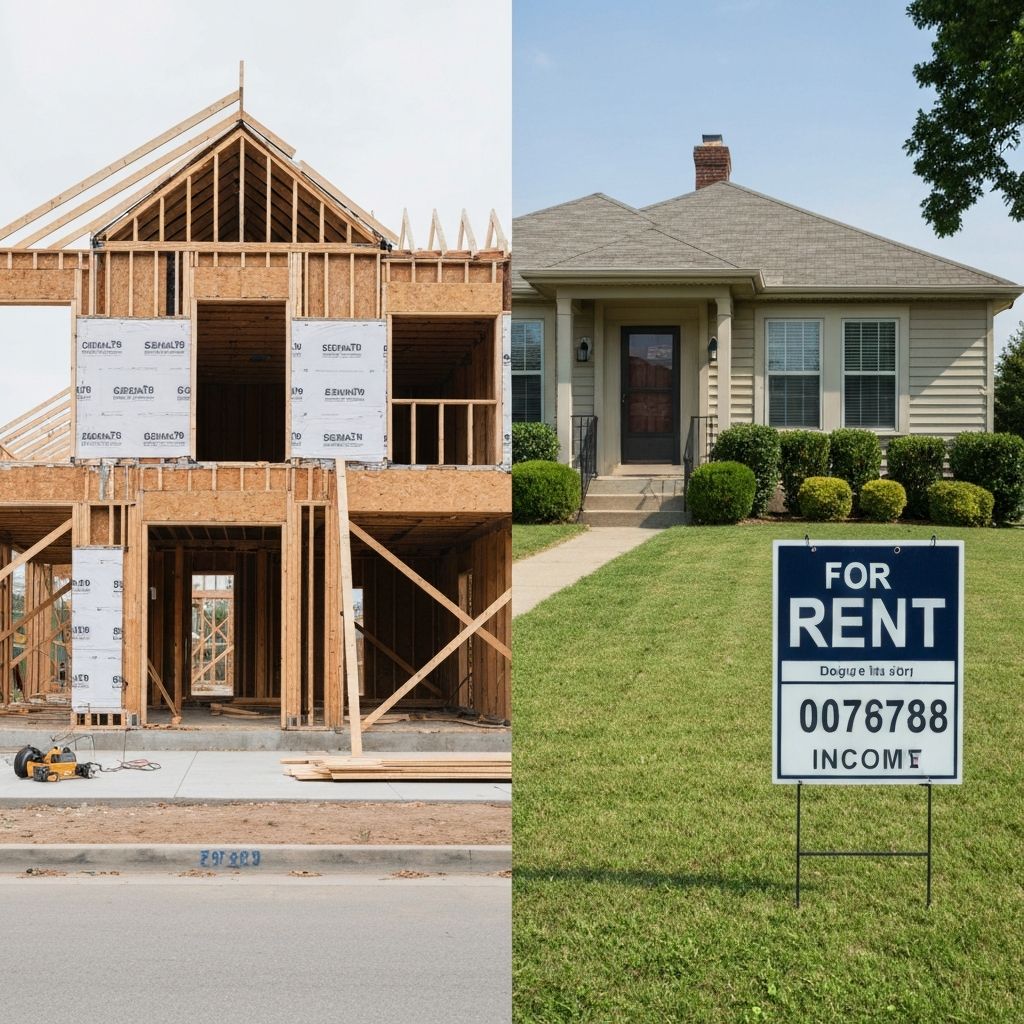
Two investors walk into the same Detroit neighborhood. They find the same distressed three-bedroom colonial. They run their due diligence, agree on the ARV, and negotiate similar purchase prices.
One investor's plan: renovate it, get it on the MLS, and sell it in 90 days. Capture the spread, pay taxes on the gain, and move to the next deal.
The other investor's plan: renovate it, rent it for $1,200/month, refinance at 75% of the new appraised value, pull out as much capital as possible, and do it again with the next distressed property.
Same property. Same market. Fundamentally different strategies — and fundamentally different outcomes.
Fix-and-flip and BRRRR are both legitimate, proven paths to building wealth through real estate. But they solve different problems, suit different personalities, and require different skills. Choosing the wrong one for your situation doesn't just leave money on the table — it can tie up your capital, misalign your time, and slow down the portfolio you're trying to build.
This guide breaks down exactly how the two strategies compare: the mechanics, the math, the risks, the tax implications, and the honest self-assessment questions that point you toward the right path.
The Core Difference: One Exit vs. Two
Before getting into the details, here's the single clearest way to understand the difference:
Fix-and-flip is a capital-generation event. You buy, renovate, sell. The deal ends. You receive a lump sum of cash (minus taxes). You start over.
BRRRR is a capital-recycling event. You buy, renovate, rent, refinance. You keep the asset. You pull out as much invested capital as the refinance allows. You repeat — ideally without deploying large amounts of fresh capital.
Flipping is a business. BRRRR is a portfolio.
Neither is superior in the abstract. They're tools for different jobs.
How Fix-and-Flip Works
The fix-and-flip cycle:
- Acquire a distressed property below market value, typically with hard money or private financing
- Renovate to a retail-ready standard that appeals to an owner-occupant buyer
- List and sell on the open market, targeting buyers who will pay ARV (or close to it)
- Capture the spread between your total cost basis and the sale price
- Repeat with a new property
The profit is realized at sale. Your success depends on buying right, controlling rehab costs, timing the sale well, and selling quickly enough to minimize carrying costs.

The Fix-and-Flip Math (Detroit Example)
| Line Item | Amount |
|---|---|
| Purchase price | $55,000 |
| Rehab cost | $38,000 |
| Hard money interest (4 months @ 12%) | $4,700 |
| Closing costs (buy + sell) | $7,500 |
| Total cost basis | $105,200 |
| ARV (post-renovation sale price) | $135,000 |
| Agent commission (6%) | $8,100 |
| Net proceeds | $126,900 |
| Gross profit | $21,700 |
| ROI on capital deployed | ~21% |
That's a solid single-deal return on a 4–5 month project. But it's also the end of the deal — the property is gone, the income stops, and you start over.
How BRRRR Works
The BRRRR cycle:
- Acquire a distressed property below market value, typically with hard money or private financing
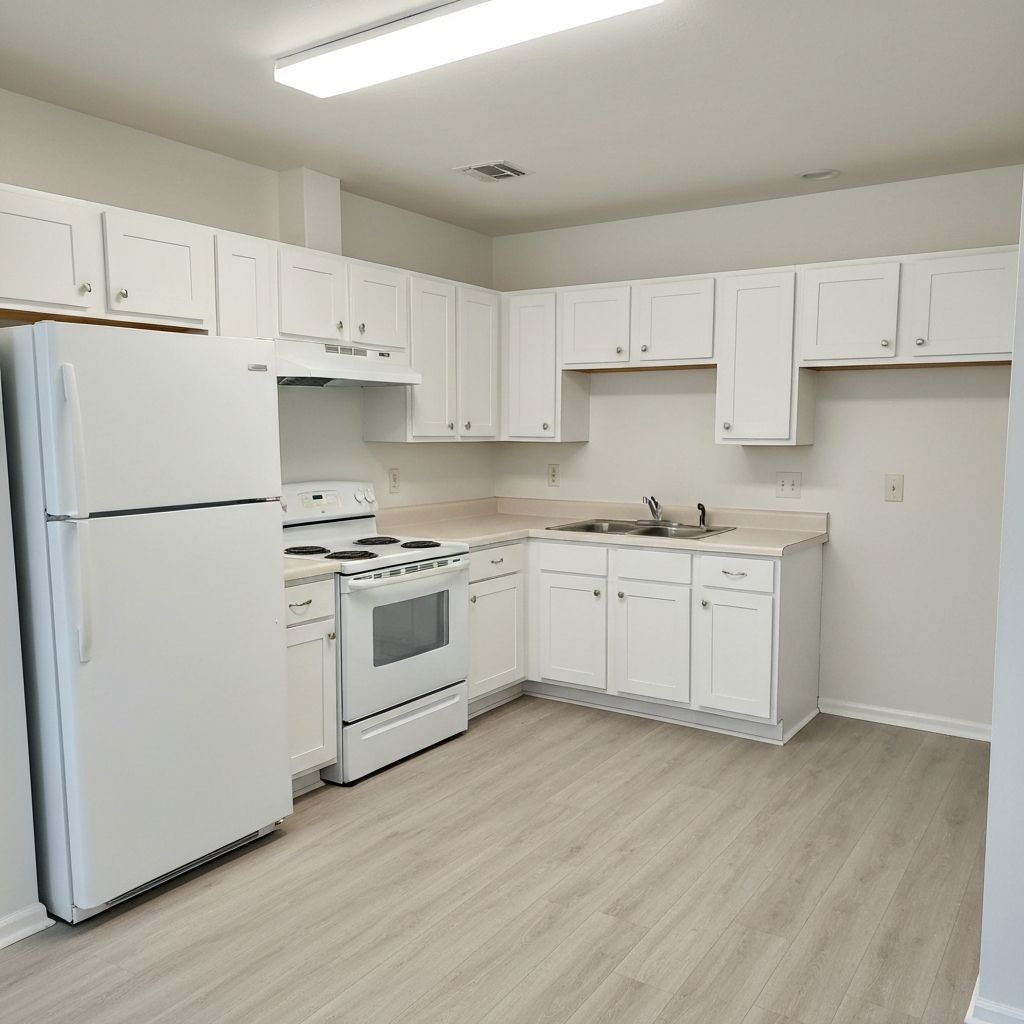
- Renovate to a rental-ready standard that attracts quality tenants
- Rent the property to generate ongoing cash flow
- Refinance via a cash-out refinance (typically DSCR or conventional) at 70–75% of the new appraised value, recovering as much of your invested capital as possible
- Repeat — use recovered capital to fund the next acquisition
The profit is realized over time: ongoing cash flow, principal paydown by tenants, appreciation, and tax advantages from depreciation.
The BRRRR Math (Same Detroit Property)
| Line Item | Amount |
|---|---|
| Purchase price | $55,000 |
| Rehab cost | $38,000 |
| Hard money interest (4 months @ 12%) | $4,700 |
| Closing costs (acquisition) | $3,500 |
| Total cost basis | $101,200 |
| ARV (post-renovation appraised value) | $135,000 |
| DSCR refinance at 75% LTV | $101,250 |
| Capital returned to investor | ~$50 |
In this scenario, you've nearly fully recycled your invested capital — leaving roughly breakeven in the deal — while retaining ownership of a cash-flowing asset.
Monthly Cash Flow:
| Income / Expense | Monthly |
|---|---|
| Gross rent | $1,200 |
| PITIA (at $101,250 / 30yr / 6.5%) | ~$1,040 |
| Management (9%) | $108 |
| Maintenance reserve (6%) | $72 |
| Vacancy allowance (8%) | $96 |
| Net monthly cash flow | ~($116) |
This specific deal is cash-flow neutral to slightly negative at 75% LTV — which is where many Detroit BRRRR deals land in the current rate environment. That's not ideal, but it's not a disaster either: you own an asset appreciating in value, tenants are paying down your mortgage, and you've recovered almost all your deployed capital to deploy again.
Push the ARV to $145,000 (achievable in stronger sub-markets), and the same 75% LTV refinance returns $108,750 — fully covering your $101,200 cost basis with $7,550 back in your pocket and meaningfully better cash flow on the new loan balance.
Model Both Exits on Every Deal
Homestream lets you run flip and BRRRR scenarios side-by-side with Detroit-accurate tax inputs, ARV comps, and DSCR calculations.
Try Homestream FreeHead-to-Head Comparison
| Factor | Fix-and-Flip | BRRRR |
|---|---|---|
| Time horizon | 4–12 months per deal | Long-term hold (years to decades) |
| Income type | Lump-sum profit at sale | Monthly cash flow + equity over time |
| Capital recovery | Full (at sale) | Partial to full (at refinance) |
| Ongoing obligation | None after sale | Landlord/management responsibilities |
| Tax treatment | Ordinary income (short-term gains) | Depreciation + deferred gains |
| Market risk | High (depends on buyer demand) | Lower (rental demand more stable) |
| Rehab standard | Retail-ready (higher finish) | Rental-ready (durable, functional) |
| Financing | Hard money → pays off at sale | Hard money → DSCR or conventional |
| Scalability | Limited by capital recycling speed | Compounds over time |
| Primary risk | Soft market, carrying costs, overruns | Appraisal gap, DSCR qualification |
The Tax Difference: This One Matters More Than Most Investors Realize
Tax treatment is one of the most meaningful — and most overlooked — differences between the two strategies.
Fix-and-Flip: Active Income, Fully Taxed
When you flip a property you've held for less than 12 months, the profit is taxed as ordinary income — the same rate as your W-2 wages. Depending on your tax bracket, that's 22–37% federal, plus state income tax.
If the IRS determines you're a habitual flipper, they may classify you as a real estate dealer, which also subjects your profits to self-employment tax (15.3% on the first ~$168,000). For a $30,000 flip profit, that effective tax burden can approach 40–50%.
There's no depreciation benefit because you never hold the property as a rental. There's no opportunity for 1031 exchange treatment because the property was inventory, not an investment.
BRRRR: Multiple Tax Advantages Built In
BRRRR's tax profile is fundamentally more favorable:
Depreciation. The IRS allows you to depreciate residential rental property over 27.5 years. On a property with a $130,000 depreciable value, that's ~$4,700 in annual depreciation deductions — paper losses that offset your rental income.
Cash-out refinance proceeds are not taxable. When you refinance and pull $90,000 out of a property, that's loan proceeds — not income. You pay no tax on the refinance. This is one of the most powerful aspects of the BRRRR wealth-building model.
1031 Exchange eligibility. When you eventually sell a BRRRR property after holding it as a rental, you can use a 1031 exchange to defer capital gains taxes by rolling the proceeds into a like-kind investment property.
100% Bonus Depreciation (reinstated 2025). The One Big Beautiful Bill signed in July 2025 reinstated 100% bonus depreciation for certain property improvements and components. BRRRR investors can accelerate significant depreciation deductions through cost segregation studies.
Risk Profiles: What Can Go Wrong
Both strategies carry risk. But the risks are different in nature.
Fix-and-Flip Risk: Market Dependency
The flip's vulnerability is the sale. Everything else can go perfectly — you bought right, the renovation came in on budget, the finished product is beautiful — and then the market softens. Days on market stretch from 30 to 90. Carrying costs accumulate. You reduce the price. The profit margin compresses.
The flip's kill shots:
- Buying too high (not enough spread to ARV)
- Rehab overruns that eat margin
- Extended time on market (each extra month of hard money is $1,000–$1,500+ in interest)
- Appraisal at sale comes in below asking price
- Buyer financing falls through
BRRRR Risk: Refinance Dependency
BRRRR's vulnerability is the refinance. If the post-renovation appraisal comes in below your projected ARV, your 75% LTV loan is smaller — meaning less capital returned, more capital trapped in the deal.
The BRRRR kill shots:
- ARV underestimated (over-optimistic comp selection)
- Rehab overruns that push cost basis above refinance proceeds
- Rental market softer than projected (rent comes in low, DSCR tightens)
- Interest rate environment shifts between acquisition and refinance
- Tenant placement delayed, extending hard money carrying costs
The Rehab Standard: An Underrated Difference
Flip renovation standard: You're selling to an owner-occupant who will live there and judge it against every other retail listing they've toured. Kitchen and bathrooms need to impress. Flooring should look premium. The staging photo needs to win.
BRRRR renovation standard: You're creating a functional, durable, clean property that attracts a qualified tenant and supports a strong appraisal. LVP flooring, functional appliances, clean paint, and working systems are what matters.
The practical effect: BRRRR renovations on the same property often cost 15–25% less than flip renovations because you're not chasing retail finish quality.
When Each Strategy Makes Sense
Choose fix-and-flip if:
- You need liquid capital in the near term
- You have strong contractor relationships and project management discipline
- You're in a market with active retail buyer demand
- Your tax situation makes ordinary income acceptable
- You want a defined beginning and end to each deal
- You're building a business you want to operate actively
Choose BRRRR if:
- Your primary goal is long-term wealth accumulation and passive income
- You want to scale a rental portfolio efficiently
- You understand and can manage the landlord role
- Detroit's market fundamentals support cash flow at realistic refinance terms
- You want to leverage depreciation and tax-deferred refinancing
- You're building toward a portfolio you hold for a decade or more
Consider both if:
Many experienced Detroit investors don't choose one — they model both exits before committing. When you underwrite a distressed property correctly, you should run two analyses: what does the flip look like, and what does the BRRRR look like? If the flip generates meaningfully more after-tax return, flip it. If the BRRRR preserves cash flow and recycles capital effectively, BRRRR it. The right exit isn't ideological — it's mathematical.
A Decision Framework
Run through these questions before committing to either path:
Capital situation
- Do you need liquid cash from the deal in the next 6–12 months? → Flip
- Are you building a portfolio you want to hold? → BRRRR
Tax situation
- Are you in a high income tax bracket with significant ordinary income? → BRRRR (defer and depreciate)
- Do you have significant losses to offset flip income? → Flip may be acceptable
Market conditions
- Is retail buyer demand strong enough to sell at ARV within 60 days? → Flip viable
- Does the rental market support cash flow at realistic DSCR refinance terms? → BRRRR viable
- Both? → Model both exits, let the numbers decide
Final Thoughts
Fix-and-flip and BRRRR are not competing philosophies — they're different tools for different jobs. The investor who flips is building a business that generates active income. The investor who BRRRRs is building a portfolio that generates passive income and long-term net worth.
In Detroit's market, both have a place. Flipping works in strong sub-markets with retail buyer demand and a clear spread between acquisition cost and ARV. BRRRR works across more of the city because Detroit's rent-to-price ratios support cash flow math that most American markets can't match.
The mistake most new investors make is choosing a strategy based on identity — "I'm a flipper" or "I'm a buy-and-hold investor" — rather than running both exits on each deal and letting the math decide. The best investors in Detroit treat their exit strategy as a variable, not a constant.
Model both. Understand both. Use whichever serves the deal.