Detroit Real Estate Market: The Investor's Guide to the City That Still Delivers Cash Flow
The honest, ground-level view of the Detroit real estate market in 2026: what the data actually shows, which neighborhoods are worth knowing, what the risk factors look like, and how to invest with conviction.
Market focus: Detroit & Michigan
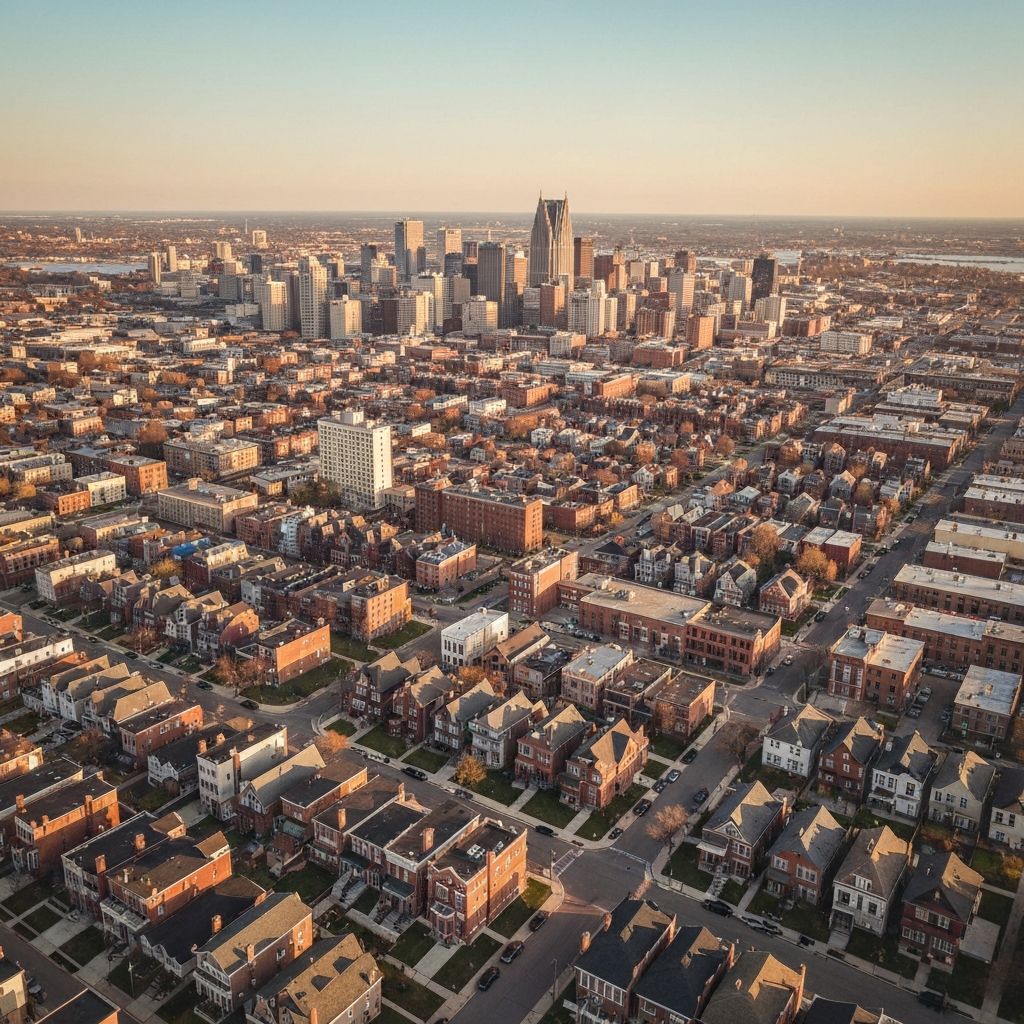
Ask any real estate investor who's built a cash-flowing portfolio in the last decade and there's a good chance Detroit comes up. Not because of headlines or hype — the city has had plenty of both — but because the underlying fundamentals for investment are real, durable, and largely unavailable in any other major American city at this price point.
Median home prices still under $110,000. Rent-to-price ratios that pencil in neighborhoods where almost nothing else in the country does. A revitalization cycle that has moved from downtown outward and shows no signs of reversing. And an investor ecosystem — lenders, contractors, property managers, wholesalers — that has grown up around serious real estate investment, not speculation.
Detroit by the Numbers: Market Snapshot (2026)
Before diving into neighborhoods and strategy, here's what the current market data shows:
| Metric | Detroit (City) | National Average |
|---|---|---|
| Median home sale price (March 2026) | ~$103,000 | ~$430,000 |
| Year-over-year price appreciation | +14.4% | ~4–5% |
| Average days on market | 63 days | ~50 days |
| Median price vs. national average | 76% below | — |
| 5-year home value appreciation | 120%+ | ~50% |
| Metro-wide 2026 appreciation forecast | 3–5% | 2–4% |
A few things stand out in that data. Detroit's median price is still dramatically below the national average — but it is moving. Year-over-year appreciation of 14.4% as of March 2026 reflects a market where demand has meaningfully outpaced supply in stabilizing neighborhoods.
For investors, this means two things simultaneously: the entry price is still compelling by any national comparison, and the days of buying anywhere in Detroit at any price and watching it appreciate are over. Sub-market selection matters more than it did three years ago.
Why Detroit Still Works for Real Estate Investment in 2026
The investment case for Detroit is not a contrarian bet anymore — it's a fundamentally-sound market with specific characteristics that continue to generate strong investor returns:
1. Cash Flow That Actually Works
The 1% rule — monthly rent ≥ 1% of purchase price — is a rough filter that's nearly impossible to hit in most major American markets. In Detroit's investment-grade neighborhoods, it remains achievable. A property acquired at $90,000 that rents for $1,100/month meets the threshold. A $75,000 acquisition renting for $1,000 exceeds it.
Compare that to Phoenix, where a $380,000 property generates $2,000/month in rent (0.5%), or Charlotte, where the math is similar. Detroit's rent-to-price ratios are structurally superior for cash-flow-focused investors.
2. Acquisition Prices That Allow Multiple Strategies
At price points of $50,000–$150,000 for investment-grade properties, Detroit supports all four primary investment strategies simultaneously: fix-and-flip, BRRRR, FHA house hacking, and buy-and-hold. The lower entry cost means:
- Lower capital requirements to get started
- More runway for rehab budget within the deal structure
- Faster portfolio scaling (3 Detroit properties vs. 1 property in a coastal market for equivalent capital)
- A larger margin of error for first-time investors learning the process
3. Ongoing Revitalization with Real Investment Behind It
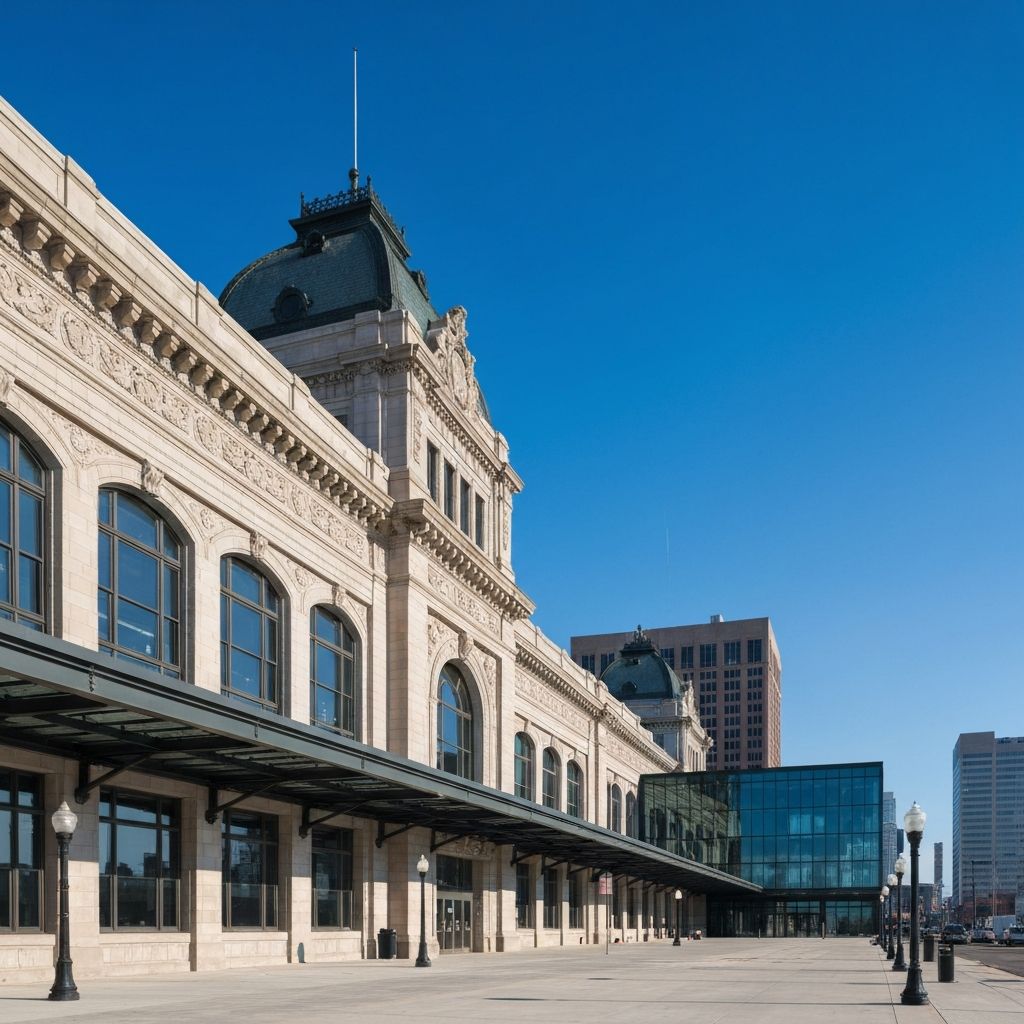
Michigan Central Station — Ford's $1B+ transformation into a mobility and technology hub
Detroit's revitalization is not a marketing narrative — it's billions of dollars of committed public and private capital with visible on-the-ground results:
Michigan Central Station (Corktown):Ford's $1B+ transformation of the historic train station into a mobility and technology hub is complete and operational. The ripple effect on surrounding property values has been substantial.
Joe Louis Greenway: A 27.5-mile multi-use trail connecting neighborhoods across the city. Linear parks have historically driven residential value increases in the corridors they touch.
Strategic Neighborhood Fund: A $150M+ initiative funding revitalization in targeted Detroit neighborhoods. SNF-designated neighborhoods have seen measurably faster stabilization than the broader city.
4. A Rental Market With Structural Demand
Detroit's homeownership rate is below 50% — significantly lower than the national average. That structural renter population creates consistent demand across a wide range of price points and property types.
5. An Investor-Experienced Local Ecosystem
Detroit has one of the most developed real estate investment ecosystems of any mid-size American city. Hard money lenders with deep Detroit experience, a large and active wholesaler network, contractors who specialize in Detroit's predominantly brick bungalow and colonial construction, property managers who know sub-market dynamics at the block level.
Detroit's Investment Landscape: Neighborhood by Neighborhood
Detroit is a city of micro-markets. What works in East English Village doesn't necessarily translate two miles away. Understanding the distinct investment profiles of key neighborhoods is not optional — it's the work.
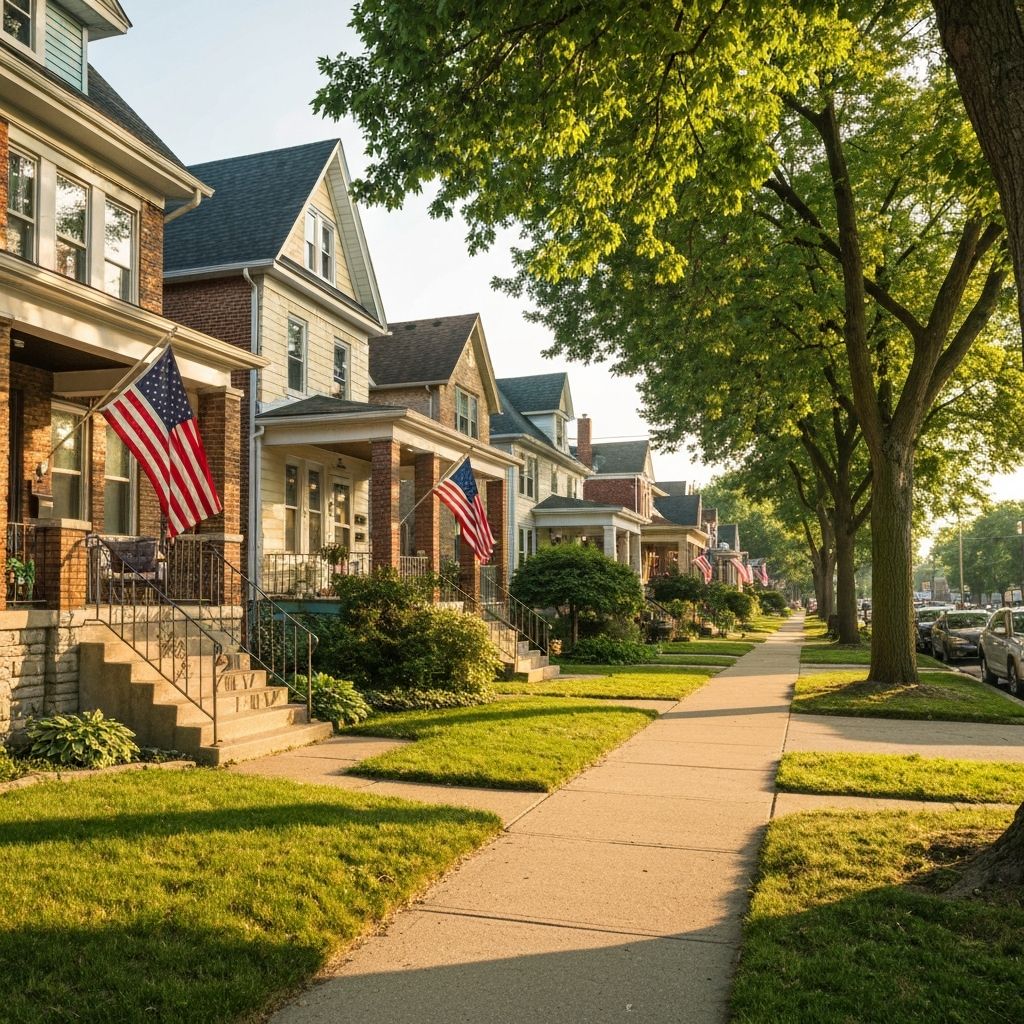
The Established Residential Core
East English Village:One of Detroit's most reliable investment neighborhoods. Predominantly brick bungalows and colonial-style homes on the east side, well-maintained streets, active neighborhood association. Listing prices have seen 11.5% year-over-year increases and still fall below $200,000 for most of the housing stock.
Grandmont-Rosedale:Five interconnected neighborhoods on the northwest side with one of the most active neighborhood associations in Detroit. Over 3,000 single-family homes, predominantly brick colonials. Michigan's largest historic district is within this footprint. A buy-and-hold investor's neighborhood — predictable, stable, increasingly in demand.
Bagley: Northwest side, near the University of Detroit Mercy. Median listing prices were $230,000 in early 2025, reflecting 15% year-over-year appreciation. Well-positioned for light-to-moderate renovation deals.
University District / Sherwood Forest: Upper-tier Detroit neighborhoods with well-preserved homes and strong community identity. Less suited for BRRRR due to acquisition prices, but strong for buy-and-hold.
The Appreciation Play Neighborhoods
Corktown:Detroit's oldest neighborhood has completed its transformation from overlooked to premium. Properties under $250,000 in Corktown are extremely rare. The investment thesis here is appreciation and STR/mid-term rental income — not traditional cash flow.
Midtown / New Center: Wayne State University, the Detroit Medical Center, and the Henry Ford Health System anchor employment. Strong rental demand from students and medical professionals.
West Village:East side, near the Detroit Riverfront. Historic early-20th century homes, emerging retail corridor. Prices have risen significantly as the neighborhood's reputation has spread.
The Value Plays: Stabilizing and Emerging Neighborhoods
Jefferson-Chalmers: East-side waterfront neighborhood undergoing active revitalization. Acquisition prices remain accessible ($50,000–$90,000 range for BRRRR candidates), rent comps are strengthening.
Fitzgerald / Bagley-Fitzgerald: City-backed and philanthropically-supported revitalization with significant renovation activity. Still early-stage, which means risk and opportunity coexist.
Core City: Just west of downtown. Transitional, with growing investor and residential interest driven by proximity to downtown employment.
The Inner-Ring Suburbs: Strong Cash Flow with Lower Volatility
| Suburb | Avg. Price (2025) | Avg. Rent | Notes |
|---|---|---|---|
| Hazel Park | $160,000+ | $1,500+ | Highest-conviction inner-ring suburb for 2026 |
| Oak Park | ~$229,000 | Strong | Borders Birmingham, Ferndale, Southfield |
| Harper Woods | $152,000+ | $1,350+ | Borders Grosse Pointes |
| Redford | ~$176,000 | $1,500 | 43% cheaper than neighboring Livonia |
Analyze Any Detroit Property in Seconds
Homestream automatically applies the 70-mill investor tax rate, pulls local rent comps, and calculates DSCR for any Detroit address.
Try Homestream FreeThe Detroit-Specific Factors Every Investor Has to Know
Investing in Detroit requires understanding a set of local dynamics that don't appear in national investing guides. Missing any of these will cost you money.
The Property Tax Structure
Michigan levies property taxes based on millage rates. In Detroit, investor-owned (non-homestead) properties are taxed at approximately 70 mills. Owner-occupied properties qualify for the Principal Residence Exemption (PRE), which drops the effective rate to approximately 18 mills.
Critical: On a property assessed at $55,000 (taxable value), the annual tax difference is roughly $2,860 — or about $238/month. Every cash flow model must be built on the non-homestead rate.
Certificate of Compliance (Rental Registration)
Detroit requires a Certificate of Compliance (CoC) before a rental property can be legally occupied. The CoC requires an inspection and confirmation that the property meets Detroit's housing code standards. Build CoC compliance into every acquisition checklist.
Lead Paint Disclosure and Compliance
Detroit's housing stock is predominantly pre-1978 construction — meaning virtually every property you acquire has the potential for lead-based paint. Rehab projects that disturb painted surfaces may require RRP certified contractors.
Title Complexity in Detroit
Detroit's history of tax foreclosures, estate situations, and decades of complex ownership chains means title issues are more common here than in most American real estate markets. Use a title company with deep Detroit experience. Never skip title insurance.
The Micro-Market Reality
Detroit's investment grade varies dramatically at the block level. A property three blocks from a stable, in-demand street can be on a block with three vacant lots and two abandoned properties. There is no substitute for driving the block.
How to Underwrite a Detroit Deal Correctly
Given Detroit's specific dynamics, here's what rigorous underwriting looks like:
- ARV from real Detroit comps. Pull 3–6 comparable closed sales within 0.5 miles, last 90 days, similar bed/bath and condition. Use the median, not the best comp.
- Property taxes at 70 mills. Run every cash flow projection with the non-homestead rate.
- Rent from actual local comps. Use market rental comparables — active and recently leased properties within the same sub-market.
- Vacancy at 8–10%. In stabilizing Detroit neighborhoods, 8% is a realistic vacancy assumption.
- Management at 8–10% of gross rent. Even if you plan to self-manage initially, model the fee.
- Maintenance reserve at 5–8% of gross rent. Distressed Detroit properties will have maintenance needs.
- CoC and lead compliance costs. Factor these into your rehab scope.
- DSCR check before committing. Calculate the ratio with the correct tax rate before you offer.
The Detroit Investment Risk Factors
No honest market guide skips the risks:
- Sub-market variance is real. Detroit's best neighborhoods and its most challenged neighborhoods are sometimes uncomfortably close to each other.
- Comp data can be thin. In transitional neighborhoods, sparse comparable sales data creates ARV and rent projection uncertainty.
- Contractor capacity is a constraint. Quality contractors are in demand, timelines are longer, and costs have risen.
- Title complexity. Detroit has more title complications per transaction than most markets.
- Tax assessment resets. At sale, the taxable value resets to 50% of the new sale price.
- Vacancy and tenant quality in C-class neighborhoods. The cash flow that looks exceptional on a spreadsheet often disappears in practice.
2026 Market Outlook
The consensus view for Detroit in 2026: steady, moderate appreciation across the metro (3–5% citywide, 5–7% in the strongest inner-ring suburbs), stable rental demand, and continued revitalization momentum in targeted neighborhoods.
This isn't an explosive appreciation market — Detroit rarely delivers double-digit annual gains to passive holders. It is a cash flow market with real appreciation tailwinds in the right sub-markets, for investors who do the work.
The investors who perform best in Detroit in 2026 will be the ones who treat sub-market selection as a primary investment decision, underwrite conservatively with Detroit-specific assumptions, and build local relationships with lenders, contractors, and property managers before they need them urgently.
How Homestream Helps You Invest in Detroit
Homestream was built for markets like Detroit — where the investment opportunity is real, but the underwriting details are specific and unforgiving. When you enter a Detroit address:
- The platform automatically applies the 70-mill investor property tax rate — not the owner-occupied rate that appears on most listings
- Rent estimates are built from local comparable rental data calibrated to the specific sub-market
- ARV is calculated through a proprietary waterfall of comparable sales data and AVM cross-checks
- DSCR, cash-on-cash return, and refinance projections flow automatically from those inputs
The result is a defensible underwriting model built on Detroit-specific assumptions — not a national template applied to a local market.
Ready to Analyze a Detroit Deal?
Get instant property analysis with Detroit-specific tax rates, local rent comps, and DSCR calculations.